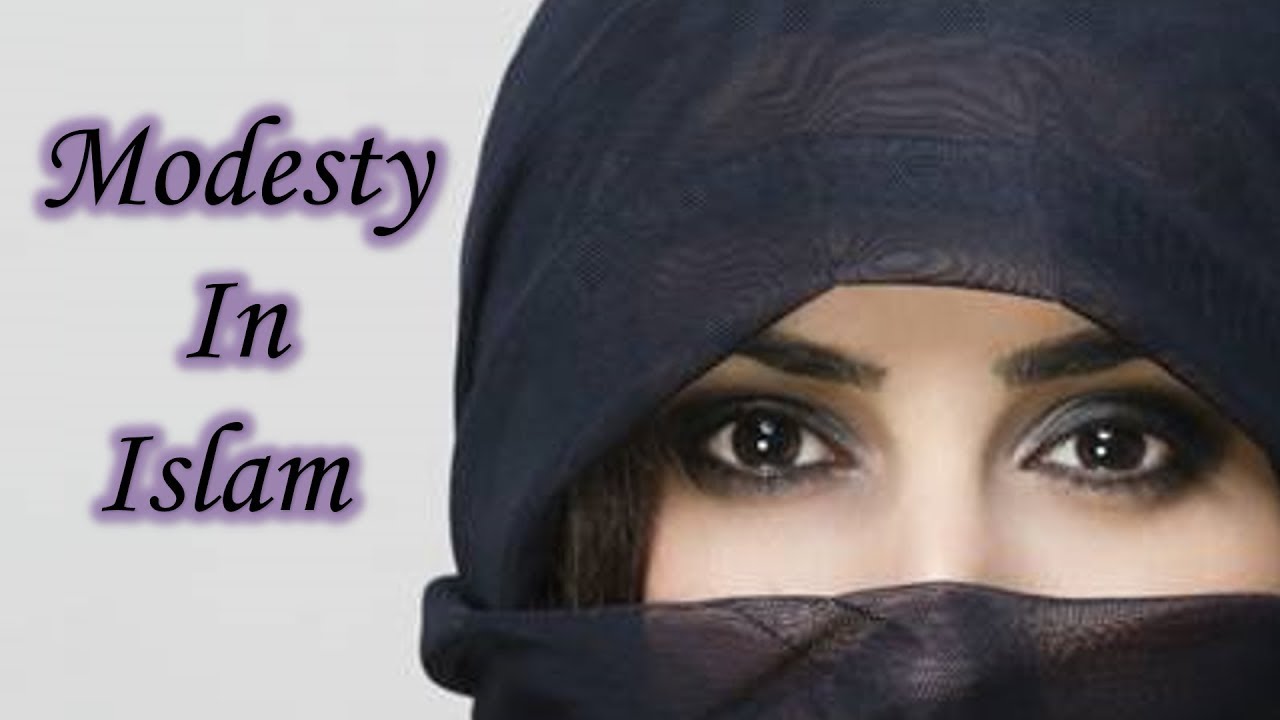
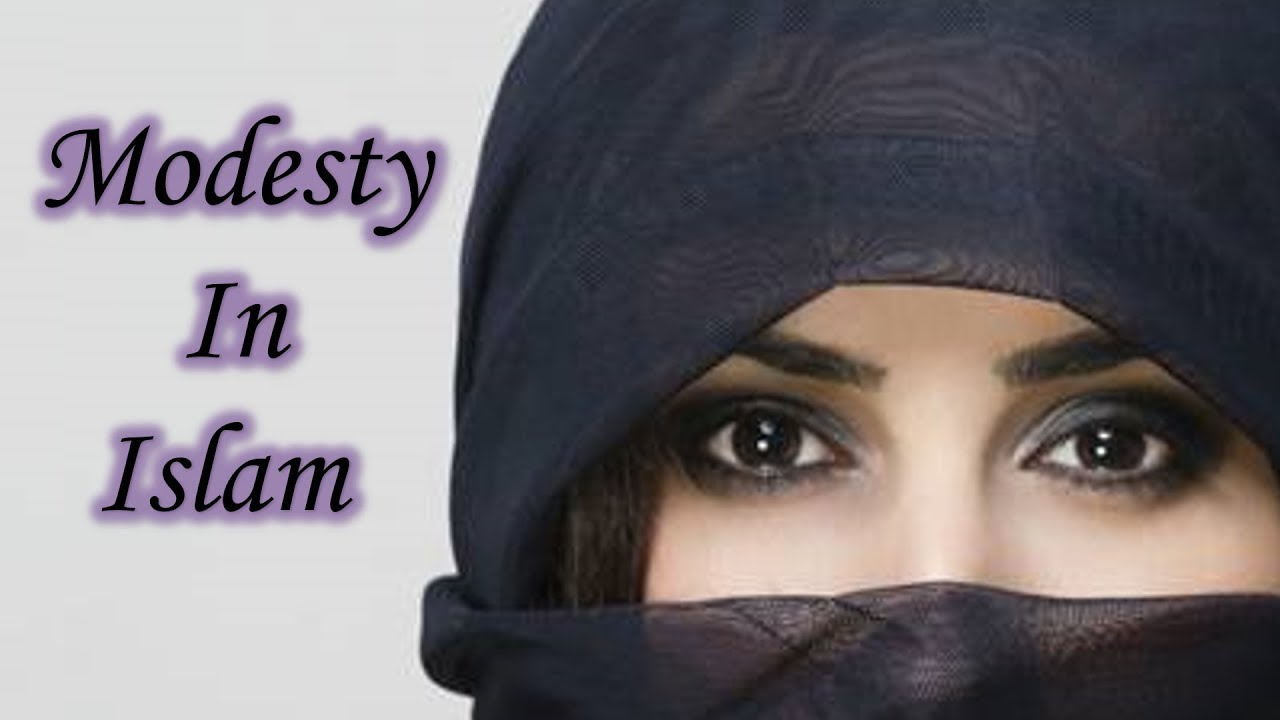
When stories and bibliographic accounts of Egyptian Muslim women are investigated and highlighted by anthropological sources, the results can foster a closer understanding of how individuals from certain populations stand on Muslim male-female customs and their interactions, as well as how particular perceptions are assessed. Culturally speaking of course researchers, as well as first-hand empirical experience, show that there is no homogeneous ruling within groups on what constitutes as traditional Muslim values except, of course, the key foundational principles of Islam.[1] With that in mind, I wish to explore three specific subjects brought forward by three key selected scholars who seek out exploratory topics on Egyptian women in Islam: Lila Abu-Lughod and her stand on ḥasham (modesty), Saba Mahmood and her approach to gendered agency, and finally Amira Mittermaier and how she questions interpretation of dreams in direct relation to the understandings of the self[2] and how the dreamer can react to the moral imperative. These writers’ anthropological findings highlight what Muslim women encounter in their own communities; to a certain extent, some of those features align with my own research studies which focus on identities of Egyptian Muslim women. Under this framework, I intend to crosscheck particular examinations from these three writers regarding relationships with other Muslim women inside a wide-ranging spectrum of Islamic values. Additionally, I will highlight how Abu-Lughod, Mahmood, and Mittermaier stand on women-men daily lives and how those examples intersect with my own research goals.

What particularly interests me are female-male assessments of what constitutes the Muslim protocols that define ‘modesty.’ In other words, the focus of my research explores the everyday man-woman interrelations first confined by the privacy of a household, and how that extends into constitutive notions of Muslim etiquette when projected outside the private scope. This paper seeks to first address how Abu-Lughod, Mahmood, and Mittermaier’s research tackles female-female and female-male Muslim relation balance. After that, I wish to bring out my own inquiries concerning women and gender balance in Muslim Egyptian context, specifically on how said balance portrays ‘traditional Islamic values’ and how this is depicted by the authors. On that last note, it is imperative to clarify that it is not my purpose to question or challenge Islamic traditional values. Rather, my aim is to consider the sincerity behind individual decisions when embracing social conventions regarding Muslim women’s modest attire, especially when those decisions are affected by private, gender-influenced considerations.
First, Lila Abu-Lughod captured my attention due to her remarkable anthropological investigation of the complexities of social systems of Bedouin communities, particularly the Awlad ‘Ali group with regards to the male-female relationship as their roles are meant to preserve their system of values. To support my argument that considers diversity within particular female Muslim groups, Abu-Lughod’s study showcases a crucial subject of ḥasham (modesty) that seems to materialise with the use of the hijab as the ultimate feature that embodies a Muslim woman’s respect and preservation of the Awlad ‘Ali’s tradition. However, I argue that autonomy appears limited in Abu-Lughod’s case as some members of that community cannot demonstrate a certain level of independence that is not unchallenged. Second, Saba Mahmood extensively reflects on Muslim women holding distinct views about forms of Islamic practice. The author focuses on particular modes of self-reflection linked to this subject. I am intrigued by the author’s representations of women in Islam and the use of their hijab as, among other claims, a symbolic meaning of modesty. Lastly, Amira Mittermaier’s case proposes a unique examination of Egypt’s renascence of dream interpretation. Although this might seem unrelated at first glance, it is relevant to the subject of this paper and my further research. Mittermaier underlines the importance of dream interpretations in recent years because they “complicate the notion of a monolithic Islam, and they matter because they destabilize conventional understanding of the real.”[3] To support my argument of the nonexistent one-size-fits-all in Muslim traditions, I claim that Western views on Islamic interpretation of dreams,[4] views which see said interpretations mostly as backward and far from any rational validation, actually complicate contemporary ethical-political discourses of power. Just as Michel Foucault addressed the replacement of the Catholic priest with a psychologist and a couch, the rational validation from so-called ‘experts’ represent a different setting where the authoritarian position of the one in control sets the rules for the vulnerable. Viewed from a different perspective, the rebound of Muslim dream interpreters might come as a response to the Freudian experts who apparently know what is best for individuals based on the sole rationalization of our collective existence. Briefly put, power relations addressed by Mittermaier’s research do intersect with the subject of selfhood autonomy within the female-male power balance; on that, Mittermaier encourages us to re-think “the imagination in and through anthropology.”[5]
Lila Abu-Lughod’s Veiled Sentiments carefully touches on an in-depth study of Awlad ‘Ali, a term that refers to Bedouin tribes which settled in Egypt’s Western Desert after migrating from eastern Libya over 200 years ago. The complexity of the social system of these communities held my attention, specifically on the particular male-female relationships where their roles are set to preserve the system traditions. In the Bedouin thought, says Abu-Lughod, honour is generally associated with masculinity, as earlier descriptions of the ‘real man’ suggested’ and “ḥasham (modesty) is associated with femininity.”[6] A Western reader might notice an instant social imbalance in Abu-Lughod’s description of Bedouin thought, or inequality to use a contemporary expression, when digging into the recognition of male-female roles, from the ones in power and those shown as powerless. However, it is clear, and at times indisputable, that these categories which led to such concessions, tolerance, and compromise are founded under the premise of complementary roles instead of what could be questionably unethical. Deepening into the subject of responsibilities between members of this community, we need to consider endless factors that contribute and shape particular roles such as the significance of blood lineage, which is attached to the “belief that a person’s nature and worth are closely tied to the worthiness of his or her stock,”[7] tribal affiliations, age, rituals, symbols, paternal bond with male children, and others. Although a woman is not fully integrated into her husband’s family pedigree, “if she has adult sons[,] she becomes secure and comfortable in her marital community. Once her husband dies and she becomes head of the household, her close association with her sons makes her seem the core of the agnatic cluster.”[8]
The apparent limits of power that a reader might observe in Abu-Lughod’s accounts underline the precarious status of those who exercise authority over others. I wish to emphasize this point, as I am primarily interested in how social precedence might or might not supersede male-female balance in the privacy of house wholes. In short, I question whether private shared roles that shape internal power balance is also reflected in the public sphere. According to the author, in Bedouin society this “depends not on force but on demonstration of the moral virtues that win respect from others.”[9]
Respect seems to be intertwined with codes of modesty such as the use of the hijab. Abu-Lughod cleverly refers to the ‘modesty code’ as a final meaning for respect and “if the threat to the social system can be experienced as a threat to individual respectability, then the social order will be reproduced by the actions of individuals in their everyday lives.”[10] In other words, in order to win the respect of others, including those who are dependent on you, “such persons must adhere to the ideals of honour,”[11] which embodies ḥasham (modesty) that seems to materialise with the use of the hijabas the ultimate feature that embodies Muslim women’s respect and preservation of the Awlad ‘Ali’s tradition. However, and this is my side note, this condition does itself carry an indisputable stand held by someone holding a position of power. Continuing on the subject of ḥasham, when I examine modesty that is intertwined with the idea of honour and social ideals, I find it fundamental to learn whether or not a Muslim woman’s acceptance of these ideals limits her central role in the private context, or furthermore, her own identity as an individual. Nevertheless, I do acknowledge the limitations when trying to reconcile or identify thin lines between what constitute as a self-effacing and social-imposed acts. What’s more, Abu-Lughod admits that “everyone recognizes that modest dress and even veiling are no guarantee of modesty.”[12] As a Western reader myself, I find that there is a constant re-evaluation when observing cultural differences and commonalities, especially when assessing the concept of selfhood versus communal, as well as private versus public, within Abu-Lughod’s exceptional details. In Veil Sentiments, one is able to clarify foundational analysis of the female role of a particular community showing diversity within itself. Women do hold a certain degree of honour, and although a Westerner might not see it as equitable to the male, I argue that contemporary societies have long forgotten the importance of modesty, ḥasham.
Abu-Lughod revisits ḥasham in its social forms including talking, eating, laughter, and denial of sexual matters.[13] Even if a woman embraces modesty, some realities must be highlighted; under any potential conflict involving personal matters such as arranged marriages or divorce, it is still the male of Awlad ‘Ali who gets the upper hand on final verdicts. As for the veiling as synonymous of ḥasham, I find the hijab is the most visible example of what constitutes modesty, although it is never clear whether the woman’s choice remains as a reflection of her own will or uncontentious choice from social conventions. Nonetheless, Abu-Lughod affirms that in the case of the Awlad ‘Ali group, veiling is “both voluntary and situational.”[14] The author’s study showcases a particular view of Muslim women’s place in this particular group while the notion of what modesty represents in the small community of Awlad ‘Ali exemplifies the vast range of cultural diversity in Islam. In sum, this subject is dominated by multifaceted members of these communities. Yet Abu-Lughod observes a deep irony where only some members of the community can demonstrate autonomy and independence, for the Awlad ‘Ali are also hierarchical people who value masculinity over femininity and age over youth. As for women, ḥasham, is the ultimate quality that earns respect; however, autonomy and self-agency is limited. In the end, Abu-Lughod finds that the women of Awlad ‘Ali “do not perceive [the hijab] as forced on women by men.”[15] On the contrary, if anyone has the authority to enforce the proper use of the hijab on women, it is the other women with guidance.
By evaluating the subject of self-agency and individual approach toward modesty with direct correlation to the hijab, Saba Mahmood’s Politics of Piety: The Islamic Revival and the Feminist Subject discusses modalities of agencies outside Western liberal and/or feminist discourses that focus on political matters which influence practices within members of groups of Muslim women, as part of the Women’s Mosque Movement of early twentieth-century Cairo. Mahmood contemplates what counts as ‘rational’ behind modalities of self toward decisions, as well as how conceptions of the personhood presume an attached influence on what could be considered as socially constructed. As I stated earlier regarding my own research questions on Muslim women, embodiment, private actions, and ḥasham, Mahmood also does not wish to concentrate on ritual practices among Muslim women and their meaning. Instead, the writer attempts to identify symbolic acts a Muslim woman exteriorizes and how assumptions from observers may not coincide with her intentions (inner self). Mahmood’s argument does not dismiss semiotic processes; instead, she argues that the aforementioned ritual practices go further “than those of meaning, communication, and symbolic signification.”[16] In short, she aims to move binary views of dimensions of these practices aside in order to put an emphasis on what can be observed outside the constructive assumptions of the practices, “Not all the practices, I suspect, will be as reasoned as they are assumed to be.”[17] As highlighted above, I am interested in the dominant subject of modesty and its different representations of women in Islam around the use of their hijab as, among other claims, a symbolic meaning of modesty. What is clearly noted throughout Mahmood’s book is the way she concentrates on modes of self-reflection, but there is a particular observation that must be stressed, which is conscious versus unconscious decisions. I always ponder how much pedagogical processes induce individual self-reflection toward the use of the hijab, and the subjective relationship toward the object that could carry family history, memories, and nostalgia, or enforcement from a particular form of power that affects gender balance (family such as husband, father, or older brother; or political such as Iran’s Morality Police).
In Mahmood’s case, her argument does not focus “on contextualizing the individual within a particular structure of the social,”[18] which is my research interest. Rather, she wishes to map the contours of the subject type presumed to be necessary to the political imaginary of the Women’s Mosque Movement and the “embodied practices through which such a subject is produced.”[19] Furthermore, Mahmood wonders that if the person’s desire for emancipation from any social structure does not come from innate desire then, we must “analyze not only hierarchical structures of social relations, but also the architecture of the self.”[20] In other words, we must dig into the links between elements that comprise the self, which in turn make possible a particular imaginary of politics. On the particularities and symbolic meanings around the hijab, or veil, the oversimplification when observing its use by Muslim women does come with an apparent universal tendency “toward the objectification of the religious imagination.”[21] Again, different meanings of self-agency emerge within practices that do not necessarily develop from politically subversive emancipatory movements. I must agree with Mahmood when she stresses that (quite often) feminist scholarship depicts emancipatory movements as rebellious while ignoring that diverse “modalities of agency whole meaning and effect are not captured within the logic of subversion and resignification of hegemonic term of discourse.”[22] Feminist critiques of Western imperialism, colonialism, and racism, along with the challenge of cultural differences, might well lead us to ask whether Western feminists need to question their own assumptions about freedom and subordination. If we wish to open up discussions of a particular issue (i.e., Muslim women and gender balance), that subject “must begin with an analysis of the specific practices of subjectivation that make the subjects of a particular social imaginary possible.”[23] Mahmood believes that different arrangements of gender inequality often coexist within a given culture, the specific forms of which are a product of the particular discursive formation that each arrangement is part of. Succinctly put, as gender inequality can be found (in one way or another) in any circle and culture, the task from an anthropologist is to show how a specific system of inequality is constructed, practiced, and maintained. However, the reader might challenge this suggestion by implying that comparative analyses do involve other systems to use as a referential base to which a group is examined. As a result, the selection of the external reference does not appear objective.
As a side note, what I find missing from most authors is a clear analysis of how objectifications of religious imagination are produced or articulated to produce different effects of objectification. For example, the use of the hijabcomes with historical attachments that make its symbolic or emotional representation almost impossible to define. As a result, this unsettled definition opens up gates for unreflective-Western-feminism assumptions that move away from micro-practices and personal-self-reflective intentions to a more homogeneous view which is charged with political-driven biases. In other words, contemporary discourses of conscious choices “cannot be understood simply as a shift from the unconscious enactment of tradition to a critical reflection upon tradition,”[24] and I stand behind her statement. What Mahmood is trying to demonstrate is the bases of cognitive learning. For example, in order for a child to learn to pray, or any other social practice, the parent or guardian takes a conscious attempt to teach and pass customary rituals to that child. In other words, for the parent to undergo a careful step-by-step teaching of an Islamic ritual task such as the salat (or praying) to the child, the person removes themselves from the unconscious competence stage of the practice to become a conscious exercise. Simply put, as the parent performs the salat five times a day, the repetitions come out unconsciously. However, the task includes the unique spiritual experience, or the self. The repetitive task of teaching becomes a conscious task, as the parent needs to also explain reasons and meanings for each step of the ritual. After mastering the craft, the ritual becomes a conscious part of your unconscious competence. Let me offer another example: Learning to type on a keyboard takes a certain amount of effort that involves paying attention to our fingers as they move to the correct keys, which is the conscious effort we need to undertake as we focus on the task. The unconscious competence is reached when we press the keys without attention to the physical keyboard, and we pay attention to the words formed on the screen. In sum, each mastered ritual becomes individually unique due to subjective and particular mode of self-reflection.[25] The learning process of cultural practices comes as a result of pedagogical undertakings that become an unconscious task not exclusive to religious principles, which brings me to the following questions: To what extend we embrace tradition without romanticising it? Furthermore, how can the conscious or unconscious modes of practices be drawn as self-reflection upon modesty and hijab?
One can agree with Mahmood’s point that practices of self-reflection have varied throughout history. The particular case in Politics of Piety about Cairo’s Women’s Mosque Movement and their notions of the self-carried a massive web of influences. The impacts go from the turmoil of Egypt’s political detachment from Britain in early twentieth century, new mass media publications, and relations of social hierarchy and institutional power that affected theological-doctrinal issues such as the move from the traditional Islamic schools, or kuttāb, to the modern system of schools, colleges and universities that admitted women. What’s more, theological and doctrinal issues shifted from the provenance of male religious scholar to ordinary women in mosques debating hadith and sunnah[26] who appear to seek for pious self and connection to Allah through alternative ways pursuing a sense of belonging. On this last note, I wish to raise a few questions. Who do we emulate when we seek for cultural identification and sense of belonging? Furthermore, and this is my critical observation, is it fair to pose all responsibility on secularist influence for the loss of personal religious affiliation? Do we really grasp the concept of personal decision toward freedom without considering the structures around us that influence such state?
One of the aims of Mahmood is to scrutinise assumptions about “the constitutive relationship between action and embodiment, resistance and agency, self and authority–that inform our judgments about nonliberal movements”[27] such as the ones she presents as part of the Women’s Mosque Movement. What is notable is the clear discourse around the involvement in a particular circle of faith which is seeking a sense of belonging. What’s more, external influences such as secularism, and its non-clear position of separations between the personal and public when it comes to religion, appears to move groups such as the Women’s Mosque Movement to reflect on the loss of tradition. In other words, “the political agency of the mosque movement (the resistance it poses to secularism) is a contingent and unanticipated consequence of the effects its ethical practices have produced in the social field.”[28] However, Mahmood’s intriguing reflection comes with a warning:
First, that it is impossible to understand the political agency of the movement without a proper grasp of its ethical agency; and second, that to read the activities of the mosque movement primarily in terms of the resistance it has posed to the loge of secular-liberal governance and its concomitant modes of sociability ignores an entire dimension of politics that remains poorly understood and undertheorized within the literature on politics and agency.[29]
Mahmood’s observation denotes a similarity to Talal Asad’s argument, which is that we should keep the meaning of agency outside secular discourses to instead try to observe “within semantic and institutional networks that define and make possible particular ways of relating to people, things, and oneself.”[30] In addition, Asad has offered a notable argument when counterposing ‘subordination’ to ‘equality.’ He underscores that this dispute “may not be an adequate way of understanding the deep character of political relations in modern society because the very concept of ‘politics’–its scope and content–has shifted significantly over time and space.”[31] In fact, stresses Asad, the concept of justice increasingly refers to a sense of belonging rather of one’s condition of life or ‘equal rights before the law.’ Furthermore, on the subject of anthropological research, his position is that “anthropologists who seek to describe rather than to moralize will consider each tradition in its own terms—even as it has come to be reconstituted by modern forces—in order to compare and contrast it with others. More precisely, they will try to understand ways of reasoning characteristic of given traditions.”[32]
Last, Amira Mittermaier questions interpretation of dreams in direct relation to women’s understandings of the self.[33] As stated earlier, Mittermaier underlines the importance of dream interpretations in recent years, as this subject does show another (quite different) side of a non-monolithic Islam. As such, I want to stress the incoherence behind the idea of the one-size-fits-all Muslim tradition. I claim that contemporary views on Islamic interpretation of dreams, mostly coming from Western scholarly sources, reinforce another stereotype of Islamic culture as far from any rational validation. In other words, if it is not seen under the microscope, it does not exist; the rational validation that ‘experts’ unilaterally holds a self-imposed authoritarian rule. Timothy Mitchell’s insights in Rule of Experts: Egypt, Techno-Politics, Modernity might help us expand this idea. He addresses the lack of skepticism of the infallibility of the ‘experts’ that colonized not only Egypt’s culture but also their field of science by removing anything but rational-calculated charts.[34] In Mittermaier’s case study, the rebound of Muslim dream interpreters might come as a response to the Freudian experts who apparently know what is best for individuals based on sole rationalization of our collective existence. In other words, universal principles applied uniformly to particular cases in the name of principles of reason supported by abstract data.[35] Mittermaier uses her personal background as a daughter of an Egyptian and as a psychoanalyst to offer a ‘rebellious’ answer to Western tradition of psychological anthropology. What’s even more intriguing is that the second part of Mitchell’s book brings forth an academic and historiographical analysis within the field of peasant studies framed by Orientalist scholarship. That is to say, the dichotomic views of the rural class as juxtaposed to modernity as inherently violent, which showcases another binary example. Power relations addressed by Mittermaier’s research do coincide with the subject of selfhood; on that, Mittermaier encourages us to rethink “the imagination in and through anthropology.”[36]One particular note from her book is that she certainly avoids centring the subject at hand solely within the religious field. Her focus centres on the life and work of four shaykhs in the shrines who guided her not only through dream interpretations but also through the unravelling of diversity in power authority, morality, social relevance, and practice. So why has dream interpretation increased in recent years? Mittermaier underlines the importance of dreams is that they complicate the notion of a monolithic Islam; more so, they destabilize conventional understandings of the real. The following story illustrates the way in which an interpretation is delivered:
Once a Caliph saw his teeth falling out in a dream. He called a dream interpreter and asked him about the meaning of his dream. The interpreter replied: ‘The entire family of my master will perish.’ The Caliph became upset, and he called for another interpreter and told him the dream. The second dream interpreter replied: ‘The dream of my master, the prince of the believers, is true, for he shall live the longest amongst his relatives.’ Immediately the Caliph embraced the man and rewarded him for his skill and tactfulness.[37]
Mittermaier wishes to underline that, even when both of the interpretations given in this story point toward the same future, they provoke opposite reactions. As the story indicates, knowing how to interpret a dream is not enough; one also needs to know how to frame the interpretation.
There is little doubt that the whole exercise of telling and interpreting dreams may appear as esoteric and unfamiliar to contemporary ethical-political arenas, just as in cases regarding Islamic moral concepts of modesty. Moreover, the Darwinian and Freudian experts, who seem to know what is best for individuals based on sole rationalization of our collective existence, ignore the real kind of approach from Mittermaier, which is a critical contribution to psychological anthropology. Using Mittermaier’s words, part of this devaluation of the dream “can be understood within a larger context of (post)colonialism and [so-called] modernization. Reforms in the nineteenth and twentieth centuries restructured not only Egypt’s military, administration, schools, and urban spaces, but also form of being in the world, subjectivities, and epistemologies.”[38] Timothy Mitchell might agree on the latter verdict by adding that the social sciences are neither universal nor trustworthy. As part of the wider reforms and ‘re-ordering’ of Egypt by the Brits, “Islam was rationalized, objectified, and functionalized, which meant eliminating those elements [dreams] that now appeared disorderly, backward, or irrational.”[39] Mittermaier explores Muslim practices of dream interpretation, as they are inflected by Islamic reformism, Western psychology, and mass mediation. One of the most attractive aspects of Mittermaier’s research is that it teaches us a great deal about Egypt and not just about dreams in general. She seeks to offer ways that dreams are interpreted, acknowledging the Freudian model which is so prevalent in the Western world, but also focusing fairly on the practices of the Middle East, where dreams have an important place for the dreamer in relation to the Divine, offer guidance, and … continually remind believers of their embeddedness in larger orders.[40] She discusses these beliefs in terms of how persons in the Middle East (specifically Egypt) relate to one another in a socio-political sense. One of the aims of Mittermaier is not to simply prove that humans are autonomous beings, but on the contrary, to demonstrate that we are much less rational than we think.
It is true, that without dream interpretations holding a more respected place in past societies, important instances in Islamic history would not have taken place. The Prophet Mohammad is praised as the first Muslim dream interpreter as recorded in hadiths with explanations and many hadiths depict the revelation as taking place in a state of trance. Abu Bakr, Mohammad’s companion and first Caliph, was known to interpret dreams. Without dream interpretation, none of Ibn ‘al Arabi’s masterworks would have never materialized. Most dreamers, stressed Mittermaier, “seek out an interpreter’s expertise because they believe that their dreams contain an ethical message and because they want help with unraveling this message.”[41] Of course, dream-visions do not fit under the rationalist’s microscope, or as Mittermaier brilliantly summarizes it, “in the eyes of the critics, dreams divert the ‘masses’ from ‘reality’,” sadly enough, she further underlines that, “no longer considered a form of moral guidance or expression, the dream has been turned into a material aspiration:”[42] the American dream, Dreamland, or the Dream Park in Cairo. The dream has become a marketing tool for tourism and fake reality. What caught my attention from Dreams that Matter is first, the serious engagement of the dialogue of “Islam” and “reality” in today’s Egypt; the second concerns the ethical effects. The ethical and the moral principle is crucial within this interaction between the dreamer and the Shaykh. It is important to highlight that one of Mittermaier’s Shaykhs (Nabil) did not resort to actual books in order to describe his interpretations; if so, it would remove the unique and unrepetitive dream experience of the self and simply fall into Western psychoanalytical diagnosis in literature. Not only is the “Islamic tradition read, studied, taught, talked about, argued over, and enacted in visible everyday contexts, but it is also experienced and re-signified in invisible, imaginary realms” where dream experiences, in order to be interpreted, depend on how they are narrated and written.
Returning to the moral imperative, I am especially intrigued by how dreams need “first to be rendered meaningful before the dreamer can react to the moral imperative they put forth.” I question the morality behind these interpretations simply because dreams originate inside the dreamer and are driven by factors around the dreamer’s intimate life that influence those thoughts and visions. So, my trepidation here ponders the power of dreams that can make the dreamer do regrettable things, for example in matters of health with the refusal to follow medical orders. On the other side of the scale of possibilities, shrines were built because they were requested in dreams, prophets arose, charity organizations started, hospitals were built, books were written, and on a smaller scale, even “little things people do in their everyday lives are at times translations of what they saw in their sleep.”[43] Although dreams can have evocative power, says Mittermaier, they can also have a performative power, or both. It can tell the dreamer what is going to happen (prophetic signs) or can be a cause that directs one’s future actions. Despite the remains of an imperialistic past that reshaped their traditional Islamic views and values, today’s Egyptians of diverse social circles “adhere to the morally binding nature of dream-visions,” … “which is usually clear and short, and is a divine imperative seemingly running perpendicular to social norms and familial ties. At the moment when they categorize their dreams, contemporary Egyptians tend to harmonize between social expectations and the possibility of divine guidance.”[44]
As discussed above, Abu-Lughod’s particular examination on ḥasham (modesty) on Veiled Sentiments deal with the ideology of Bedouin social life the social order of kinship and family life, the ideals of honor, autonomy, and modesty, not to mention the gender hierarchy, lineage control of reproduction, inequality can be observed in its symbols, in dress, and deferential behaviour. Mahmood and her approach to gendered agency where I especially observe how Muslim women hold distinct views regarding forms of Islamic practice, particularly on the use of their hijab as, among other claims, a symbolic meaning of modesty; and Mittermaier on interpretation of dreams in direct relation to one’s understandings of the self and the pursue of answers to moral trepidations. We have observed that the search for sense of belonging, loss of traditions, and particular social identities remain under the interventionist influences occurred in the wake of colonialism and as part of a broader modernizing project. These efforts continue in different forms today as the “student missions, the founding of secular universities, and the importation of psychoanalysis can all be understood within the context of a hegemonic evolutionary model that created a need for Egypt to modernize along European lines.”[45]
[1] Religious obligations of all Muslims summed up in the Five Pillars of Islam, which include belief in Allah and his Prophet, obligations of prayer, charity, pilgrimage, and fasting.
[2] Mittermaier’s approach here builds on the work of Saba Mahmood who has directed her attention to different experiences within the context of the Islamic Revival that has reshaped the social strata of Egypt since the 1970s.
Amira Mittermaier, Dreams that Matter: Egyptian Landscapes of the Imagination (Berkeley, CA: University of California Press, 2011), 4.
[3] Amira Mittermaier, Dreams that Matter: Egyptian Landscapes of the Imagination (Berkeley, CA: University of California Press, 2011), 2.
[4] The author offers an overlapping analogy with Catholic worshippers.
[5] Mittermaier, Dreams that Matter, 29.
[6] Saba Mahmood, Politics of Piety: The Islamic Revival and the Feminist Subject (Princeton, N.J: Princeton University Press, 2005), 118.
[7] Mahmood, Politics of Piety, 45.
[8] Mahmood, 54.
[9] Ibid., 99.
[10] Ibid., 150.
[11] Ibid.
[12] Ibid., 153.
[13] A psychologist might suggest that, when it comes capture someone’s attention, there is nothing more attractive than a rejection. Maybe we are losing on that field.
[14] Mahmood, 159.
[15] Ibid.
[16] Saba Mahmood, Politics of Piety: The Islamic Revival and the Feminist Subject (Princeton, N.J: Princeton University Press, 2005), xi.
[17] Saba Mahmood, Politics of Piety, xiii.
[18] Mahmood., 152.
[19] Ibid.
[20] Ibid.
[21] Ibid., 54.
[22] Ibid., 153.
[23] Ibid., 154.
[24] Ibid.
[25] Ibid., 146-148.
[26] Ibid., 55.
[27] Ibid., 38.
[28] Ibid., 35.
[29] Ibid.
[30] Talal Asad, Formations of the Secular: Christianity, Islam, modernity (Stanford, CA: Stanford University Press, 2003), 78.
[31] Talal Asad, Secular Translations: Nation-State, Modern Self, And Calculative Reason (New York, NY: Columbia University Press, 2018), 32.
[32] Talal Asad, Genealogies of Religion: Discipline and Reasons of Power in Christianity and Islam (Baltimore: Johns Hopkins University Press, 1993), 200.
[33] She actually builds on the work of Saba Mahmood who has directed her attention to different experiences within the context of the Islamic Revival that has reshaped the social layers of Egypt since the 1970s.
[34] Timothy Mitchell, Rule of Experts: Egypt, Techno-Politics, Modernity, 1st ed. (Berkeley: University of California Press, 2002), 102-103.
[35] Mitchell, Rule of Experts, 56-57.
[36] Mittermaier, Dreams that Matter, 29.
[37] Mittermaier, 63.
[38] Mittermaier, 7.
[39] Ibid.
[40] Ibid., 2-3.
[41] Ibid., 78.
[42] Ibid., 8.
[43] Ibid., 170.
[44] Ibid., 143.
[45] Ibid., 175.
Bibliography
Abu-Lughod, Lila. Veiled Sentiments : Honor and Poetry in a Bedouin Society. Thirtieth anniversary edition / with a new afterword. Berkeley, CA: University of California Press, 2016.
Asad, Talal. Formations of the Secular: Christianity, Islam, modernity. Stanford, CA: Stanford University Press, 2003.
——— . Genealogies of Religion: Discipline and Reasons of Power in Christianity and Islam. Baltimore: Johns Hopkins University Press, 1993.
——— . Secular Translations: Nation-State, Modern Self, And Calculative Reason. New York, NY: Columbia University Press, 2018.
Mahmood, Saba. Politics of Piety: The Islamic Revival and the Feminist Subject. Princeton, N.J: Princeton University Press, 2005.
Mitchell, Timothy. Rule of Experts: Egypt, Techno-Politics, Modernity. 1st ed. Berkeley: University of California Press, 2002.
Mittermaier, Amira. Dreams that Matter: Egyptian Landscapes of the Imagination. Berkeley, CA: University of California Press, 2011.
 My Bookshelves
Leave a comment