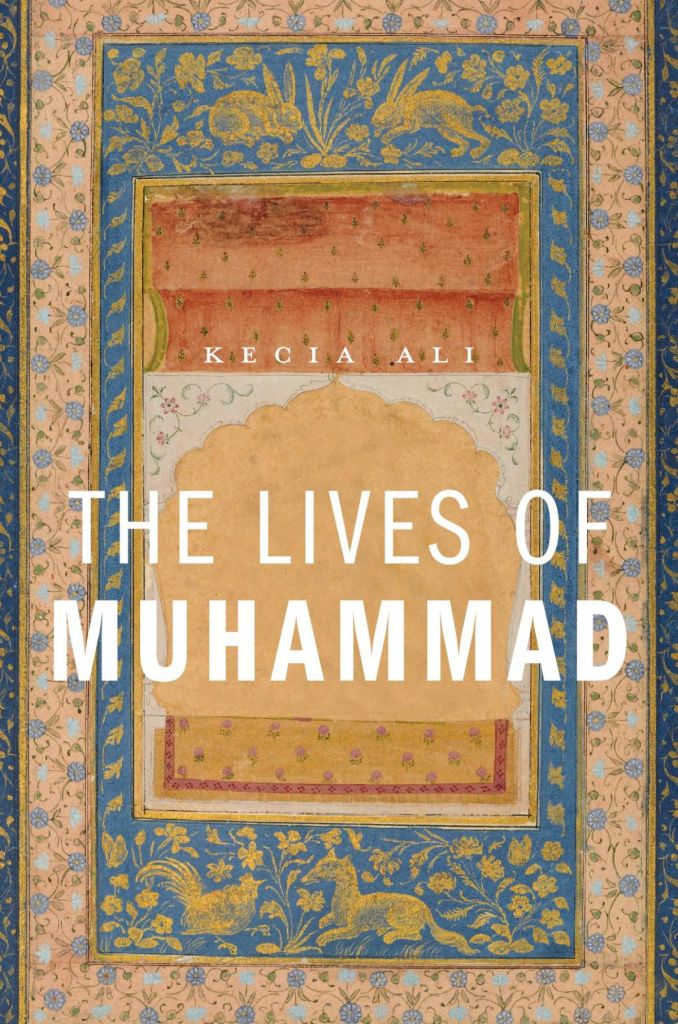
Kecia Ali explores the subject of portrayals of the Prophet Muhammad and the multifaceted narratives surrounding his life in Islamic tradition. She stress key notes where biographic narratives, especially at the turn of the twentieth century, where hidden agendas can be unveiled.[1] In short, one commonality between modern biographies illustrate a clash between the Islam and the West, which extrapolates to what Christianity faced during and after Reformation. After all, says Ali, my experiences attest to the impotence of facts alone to change people’s beliefs. In other words, no matter how convincing facts are, they will not be enough to persuade people there’s another perspective. As an extension, Ali underlines that westerners and western intellectuals often choose what they want to believe, rather than believing what the evidence suggests. With that in mind, this short paper aims to highlight key points raised by Kecia Ali in her book The Lives of Muhammad, not about the life of Muhammad but about the way in which his life has been told, including inherited controversies raised by scholars.
One of the core highlights of her book is to show “the convergence of traditions,”[2] which has occurred on a stage where British and American writers arose, and texts were adjusted to suit their particular audiences. As an extension, events were either omitted and/or included with variations their audiences may find appealing. As an example, Ali objectively uses the Egyptian case during the mid-twentieth century where writings portrayed the Prophet Muhammad as an example of socialism and socialist reformer (equality among human beings) because their society needed that approach.[3] In short, Ali examines the diverse perspectives found within historical accounts on the Prophet’s biographies as well as religious texts to offer a comprehensive understanding of Muhammad’s life and legacy. A very crucial message of Ali’s thesis is that Muslim and non-Muslim biographies of Muhammad have taken a pseudo “Protestant” spin. Authors focus on the Prophet as a historical figure whose life story is continually refashioned and reinvented to align ever evolving sensibilities of their societies, rather than as a source of metaphysical truth. Ali makes it clear by comparing Muhammad’s portrayals against Jesus accounts by underlining that, when it comes to biographical notes of Muhammad appear to be directly linked to writers’ intentions, “whereas the big wins of Jesus scholarship have to do with context, [which] is precisely what is missing from sources for Muhammad’s life.”[4] Modern Muslim approach to Muhammad’s biography can only be understood once we explore “the millennium of writings that preceded it.”[5]
Medieval accounts denoted humiliation and shameful accounts from a Eurocentric judgement; early modern times (15th to 16th CE) persisted in English works; Enlightenment and Romanticism writings highlight that tone too; and power over Muslim-ruled territories (economic and cultural dominance) were reflected on depictions of Christianity as superior. This was no different than the narratives from colonial powers over their colonized groups. A quick glimpse of examples of how European scholarship shaped different biographies of the Prophet Muhammad finds within the 19th-century times writings making equivalencies between Muhammad and the Pope as anti-Christ and, as an extension, blamed Judaism for “the killing of the son of God.”[6] Moreover, the remains of Enlightenment thinking extended its criticism of Muhammad far beyond Islam to the point of “considering all religions equally false.”[7]
Ali’s analysis of the various biographical sources that document Muhammad’s life attempts to evaluate whether sources can be considered reliable and/or authentic considering the political and sociological context from which biographies were published. She critically highlights the complexities of interpreting historical narratives and the challenges of separating fact from myth. In short, Ali examines the depiction of Muhammad by outlining the evolution of his image over time and across different cultural contexts such as gender relations, religious pluralism, as well as faith and politics. As stated earlier, the tones used to address biographical accounts of the Prophet Muhammad differed throughout history based on socio-cultural and clerical-political structures. The author underlines the Enlightenment critique of religion all across the board, the growth of academic oriental studies, and the rise of colonialism that led to an increased connection between Muslims and non-Muslim accounts of Muhammad’s life. This grew drastically during the 19th century where historical events surrounding authors set grounds to either express or repress their work. Ali offers key examples such as French occupation of Egypt that shifted colonial patterns, colonial control of North Africa such as Algeria, British rule over India, African and other Asian territories, and to a certain extend the decline of the Ottoman Empire, to name a few. Due to my particular focus on women within the Islamic narratives, I wish stress the importance of the above political events as critical “for the establishment of a colonialist party line on women and Islam, which is still broadly influential, and came to affect how people thought about Muhammad’s marriages.”[8]
There is a particular instance in Ali’s book I found pivotal to exemplify the mindset of a writer when addressing Muhammad and his marriages. On the one hand, the model of a husband when married to Khadija (the older woman); on the other hand, Muhammad as a husband when he married Aisha (the young woman):
For contemporary Westerners, the association between Islam and women’s oppression is strongly ingrained. This has not always been the case. Muhammad’s wives become more important as the idea of Muslim women becomes more important to discussions about Islam. The oppressed but alluring Muslim woman is a creature of the last few centuries. So is her counterpart: the pious, active female role model, of whom Khadija is the ideal example. And if she is a new kind of woman, Muhammad, as her husband must be a new kind of man.[9]
These two examples cleverly exemplify the dichotomies found when a husband is married to a woman that suits writers’ socially acceptable parameters. The image of Muhammad married to a woman 15 years older than him, not to mention rich, showcases a powerful woman in control; while Muhammad’s marriage to the very young Aisha completely erases the previous record to give an image of a husband who controls a submissive-young wife. In other words, even when Khadija is the ideal example and may have been merited furthermore due to the length on their marriage (twice as long as any other woman), the obsessive focus on Aisha is used to discredit what it should be an account within an otherwise fair historical context. As underlined by Ali, authors’ selections from a particular story, instead of the whole context, reflect and respond to the scholars societal needs, momentum, political circumstances, as well as personal motives injected into their narrations. Ali reflects on the political turmoil in early to middle 20th-century Egypt where writings reflected Muhammad from the point on statehood and socialist view. However, we can agree that modern definitions such as ‘socialism’ appear misfit within the 7th-century Arabia. To be fair, pinpointing ancient narratives do sometimes serve as moral or political example to modern issues as well.
Another fundamental point Ali raises when she engages with the so-called ‘modern’ writings surrounding Muhammad’s life and how those biographical accounts reflect their contemporary needs through colonial times is how European scholarship clearly shaped the categorization of religion. This categorization, which is another reflection of the need for labelling ‘the other’ as a subject of examination, enabled religion as a subject of studies. As an extension, included “the birth of modern study of Islam.”[10] What Ali makes clear is that, regardless of the subject at hand, it is critical to become aware of the complexities and ambiguities imbedded in historical events; this requires a great level of academic humility and humbleness, which is hard to find. It is noteworthy how Ali constantly remind us that, on the subject of Muhammad, selections and/or biographies from Arabic to English can find in the latter tones or expressions non-existent in the first language.[11]
There’s an interesting note from Ali that applies to all Abrahamic religions, which is the importance of the number 40 and its symbolism. Ali succinctly points at some of them under the premise that symbolisms “matter more than factual accuracy,”[12] which can define characters around the figure (the Prophet). Along with 40 applied to the Jews and the Flood, years through desert, days of Jesus tempted by the devil, and so forth, this number is crucial in Islamic tradition because it is at 40 when Muhammad started to receive the Revelations. Moreover, this number reflects a breaking point in a human as it implies stage of maturity, maybe as a result of the previous event. Another very important bulk of Ali’s book offers an interesting analysis on how many authors offered unapologetic refutations on Muhammad’s marriages, in part, to juxtapose the European-Christian-hegemonic view on what constitutes an exemplary matrimony (i.e., Joseph and Mary). What is interesting, if we draw a link between the Christian-Islam dialogue on the subject of Mary, the mother of Jesus, Mary’s husband (addressed in the Gospels as Joseph) is never mentioned within the Qur’anic revelations. What’s more remarkable, there is an entire surah (chapter) in the Qur’an that not only addresses the story of Mary and Jesus but also carries al-Maryam (the Mary)[13] as the title of the chapter. Now, let’s address the elephant in the room, which is the relatively new obsession from non-Muslim scholars and their moral objections and condemnations of the Prophet Muhammad’s last marriages including the young Aisha.
The very young age of Aisha shifted the previous image of Muhammad of a man married to an elder-rich woman, Khadija, to later become a man that corrupts. In short, the polygamy and the marriage with a child. Ali offers an interesting point by underlining that “Muhammad’s change of marital conduct is of piece with a larger change in his morals.”[14] In other words, the narratives shifted from the exemplar husband to judge his ethical choices by simply condemning multiple marriages. This gave rise to a series of Muslim apologists having to constantly explain by taking up the pen in response. When I say “relatively” new, it is because this subject only dominated Western scholarly material from the first half of the 20th-century on. Writers’ concern about Aisha’s age reflected societal unrest, especially in Muslim-majority countries where proposed legal reforms by females and male voices against multiple marriages were unsuccessful. Here is where Ali makes another critical observation by emphasizing that “one thing is to suggest that a practice has no place in a modern Muslim society, that its costs outweigh its benefits, it is quite another to attach any opprobrium to deeds of the Prophet.”[15] Once more, any argument Muslim scholars may have had, when citing historical events regarding Muhammad’s life, they all defend his actions by treating those events within a completely historical and mindset than ours. Ali brings Syed Zaidi to backup her argument by stressing that “Muhammad’s marriages sheet [a] number of explanations or [even] refutations: circumstances serve to explain (and perhaps excuse) his conduct.”[16] When Ali refers to “Muhammad’s monogamous and happy-compassionate marriage to Khadija full of conventional wisdom, to be understood as the norm for his conduct, his other marriages “were attributed to pity, protection, or politics,”[17] when a casual reader might simply find that his simply had different life experiences when different women crossed his life. However, there are two elements I would like to interject within this Muslim-non-Muslim ‘dialogue’ on the subject of Muhammad’s marriages, including Aisha’s age:
When it comes to explain, to respond, to justify, to uphold one’s culture from the silver bullets shot from Western policing of what constitutes morality, it is clear who is in a privilege position. In other words, who’s labeling who reveals the power dynamics. Only those in a vulnerable position (minority based on power balance) can clearly understand the exhaustion of the constant need to clarify one’s culture to those controlling the narrative; the demand to clarify historical-past events when morality is in order.
There is something very central Ali questions on this subject, it is it is not about the subject of condemnation of Muhammad’s actions or Alisha’s age. The author ponders “why the sources care”[18] as she sees that “any attempt to corroborate or refute specific figures is doomed to failure.”[19] The constant need for Muslims to respond to Western academia (or media in general) on subjects the latter find crucial to research, compile, or explore only proves the self-imposed right to define what is found in ‘the other.’ Furthermore, the remains of Darwinian and colonialist times appears to continue threating the Christian-academia-hegemonic discourse. The evaluation of Aisha’s age and her marriage to the Prophet Muhammad is a clear example of that remains where Muslims must constantly respond to, what I describe as, “the rule of the experts:”[20] the experts in morality, of course. Having to relentlessly provide answers to accusation perfectly demonstrate the scholars’ mindset. In other words, scholars’ accreditations that can fill up a wall do not exonerate them from being biased or subjected to personal intensions. It is imperative to make clear that Muslims do not need to clarify anything to anyone because the only to respond is Allah.[21] If a Muslim scholar embarks through this path, it is part of her/his freedom to use their pen. In my case, I do admit the irritation behind every line I offer to justify what has no need for justification. But I am a scholar of religion, and the unwritten rules dictate a separation between practice and research.
To comprehend the historical events surrounding Muhammad and Aisha, we must set our analysis within the 7th-century frame where being ready for marriage did observe age number, but also maturity. Only very recently marriages set a minimum age while historically societies evaluate it over maturity.[22] So, if we consider the number 18 to be measured as to be mature to marry, we could logically certify that if the person is 17 years 23 hours and 50 minutes old is not mature enough until waits 10 more minutes. If this example sounds childish, the use of the number 18 as a line to demonstrate maturity may appear just as ludicrous for the 7th-century mindset. What is interesting that the age limitations is only relevant in terms of the legalities surrounding sexuality; I am not even attempt to offer details on the fixation of the ‘man’ as a sexual being and the ‘woman’ as a moral responder. What is astonishingly absurd is that most critics and knockers of the Muhammad-Aisha marriage topic come from the USA where, up to the third decade of the 21st Century, “child marriage is still legal in most of their states.”[23]. Apologetic notes from Muslim scholars on Aisha’s age at the time she married Muhammad dominate a big spectrum of media, and in our times, social media take the whole cake. Among apologists, we find justifications such as: maturity of Aisha;[24] the need for companionship from Muhammad;[25] offer from Abu Bakr to Muhammad to marry is daughter; or the importance of political alliances[26] as Aisha came from a very reputable clan and historically respected family lineage. One crucial note remains: Muslim apologetic believers, just like in any other circle of faith, read scriptural texts in isolation from their commentarial traditions and often without expert guidance,”[27] which in turn creates further controversies that boost critics’ claims.
Ali’s The Lives of Muhammad examines the various ways the life of Prophet Muhammad has been portrayed and interpreted by Muslim and non-Muslim writers over the centuries. The main point and intention of the book showcases how biographies of Muhammad have evolved and transformed since the 19th century. She brings a very diverse pot of writers from different backgrounds: Protestant missionaries, European Orientalists, Indian and Egyptian modernists, American preachers, American scholars, islamophobes, journalists, and academics to show that they have debated and reshaped early materials about Muhammad’s life to fit their own perspectives and agendas. Depictions of Muhammad as a social reformer, consummate leader, or an ideal husband arose in juxtaposition with and in tension against Western depictions of him; all shaped by evolving ideas about religion, sexuality, and human accomplishments. Ali’s intention is not to determine the historical facts about Muhammad’s life, which she considers elusive and debatable. Rather, she aims to understand the diverse motivations and contexts that influenced the various narratives about his life over time.
Ali examines how symbolic texts about Muhammad came to be read literally, and how key aspects of his life – his military campaigns, relationships with women such as Aisha, and interactions with Meccans (people from the city of Makkah) and Medinan (from Medina) Jews – have been engaged and reinterpreted by different writers. In principle, Ali provides a comprehensive analysis of the evolving and interdependent perspectives on Muhammad’s life story, shedding light on how these narratives reflect the changing sensibilities and agendas of their authors across different eras and cultures. She notes that biographies and depictions of the Prophet Muhammad, both by Muslims and non-Muslims, have become increasingly interdependent and shaped by evolving ideas about religion, sexuality, and human accomplishments since the 19th century. Specifically, Ali argues that two separate streams of writing about Muhammad – hagiographic (idealized) by Muslims and polemical (critical) by non-Muslims – have merged into a single, contentious narrative over time. Modern biographies, seem to follow one another when they reimagine Muhammad either as a social reformer, ideal leader, or consummate husband in tension against Western depictions. These depictions seek to shape new notions about religion and human achievements. Ali further argues that it is futile in the 21st century to speak of ‘Muslim views’ of Muhammad opposed to the so-called ‘Western or Christian views’ precisely because of the interdependence between the two narrative streams over the past two centuries. She aims not to determine historical facts about Muhammad’s life but to understand the big spectrum of motivations and contexts that influenced the construction of narratives about his life across different eras and cultures. Isn’t this what we scholars aim when embarking research? Then, should not this be applied across all fields of studies?
Bibliography
Ali, Kecia. The Lives of Muhammad. Cambridge, Massachusetts: Harvard University Press, 2016.
O’Connell-Domenech, Alejandra. “Child Marriage Is Still Legal in Most of the U.S. Here’s Why.” The Hill, November 20, 2023. https://thehill.com/changing-america/respect/equality/4283941-child-marriage-is-still-legal-in-most-of-the-u-s-heres-why/.
[1] Kecia Ali, The Lives of Muhammad (Cambridge, Massachusetts: Harvard University Press, 2016), 231.
[2] Ali, The Lives of Muhammad, 240.
[3] Despite the fact that “socialism” was not a seventh-century idea.
[4] Ali, The Lives of Muhammad, 244.
[5] Ali, 20.
[6] Ibid., 30.
[7] Ibid., 34.
[8] Ibid., 47.
[9] Ibid., 117.
[10] Ibid., 33.
[11] Ibid., 122.
[12] Ibid., 120.
[13] Here is where a scholar of religion might wonder if the presence of Joseph, either by addition or omission of other notes, might have provided that prototype of the perfect family to the otherwise experience of a single mother. This writer also ponders the implications and impacts to women’s right throughout history if stories, such as the one offered in the Gospels, reflected the image of the single mother as a non-derogatory case. Not so much for the story per se, but the interpretations and conclusions offered through it by the clergy.
[14] Ali, 131.
[15] Ibid., 133.
[16] Ibid., 134.
[17] Ibid., 138.
[18] Ibid., 157.
[19] Ibid.
[20] Term borrowed from Timothy Mitchell’s 2002 book Rule of Experts Egypt, Techno-Politics, Modernity.
[21] Muslim: the individual who submits to the will of God.
[22] My aunt was 16 and her husband 25 when they married in Italy. She’s still with us (90 years old).
[23] Alejandra O’Connell-Domenech, Alejandra. “Child Marriage Is Still Legal in Most of the U.S. Here’s Why.” thehill.com, October 31, 2023. Accessed July 6, 2024. https://thehill.com/changing-america/respect/equality/4283941-child-marriage-is-still-legal-in-most-of-the-u-s-heres-why/.
[24] Ali, 175.
[25] Ibid., 188.
[26] Ibid., 173.
[27] Ibid., 239.
 My Bookshelves
Leave a comment